The worktop is one of the biggest choices in a new kitchen. It has to look right on the day it goes in, but it also has to cope with the way you use the room, and it's a big part of the budget.
We fit everything from affordable laminates to natural stone and engineered quartz. Each one has its place, and knowing the differences makes the choice a lot easier.
Laminate
Laminate has come a long way. Modern finishes copy stone, concrete and timber surprisingly well, so you can have a stylish kitchen without paying for solid stone. It's fairly easy to look after, comes in a huge range of colours and finishes, and is generally very good value.
The weak points are heat and water. A hot pan can damage the surface, and water left standing around a badly sealed joint or sink cut-out can make it swell over time. It's also harder to repair if it gets chipped or burnt.
We think it's a really good choice where budget matters, as long as it's fitted properly and looked after.
Natural stone
Granite, marble and quartzite give you something a manufactured surface can't copy. Every slab is different, with its own veining and colour.
Granite is generally very durable and stands up well to heat and everyday wear. Marble is beautiful but softer. It stains and scratches more easily, and acids like lemon juice and vinegar can etch it. Quartzite can be very durable, but that depends on the stone you pick.
Some stones need sealing to protect them from stains. How much upkeep you'll have depends on the stone and the finish.
Stone can make a kitchen look stunning, but not every stone suits every household. It's worth understanding the one you've chosen before you commit to it.
Engineered quartz
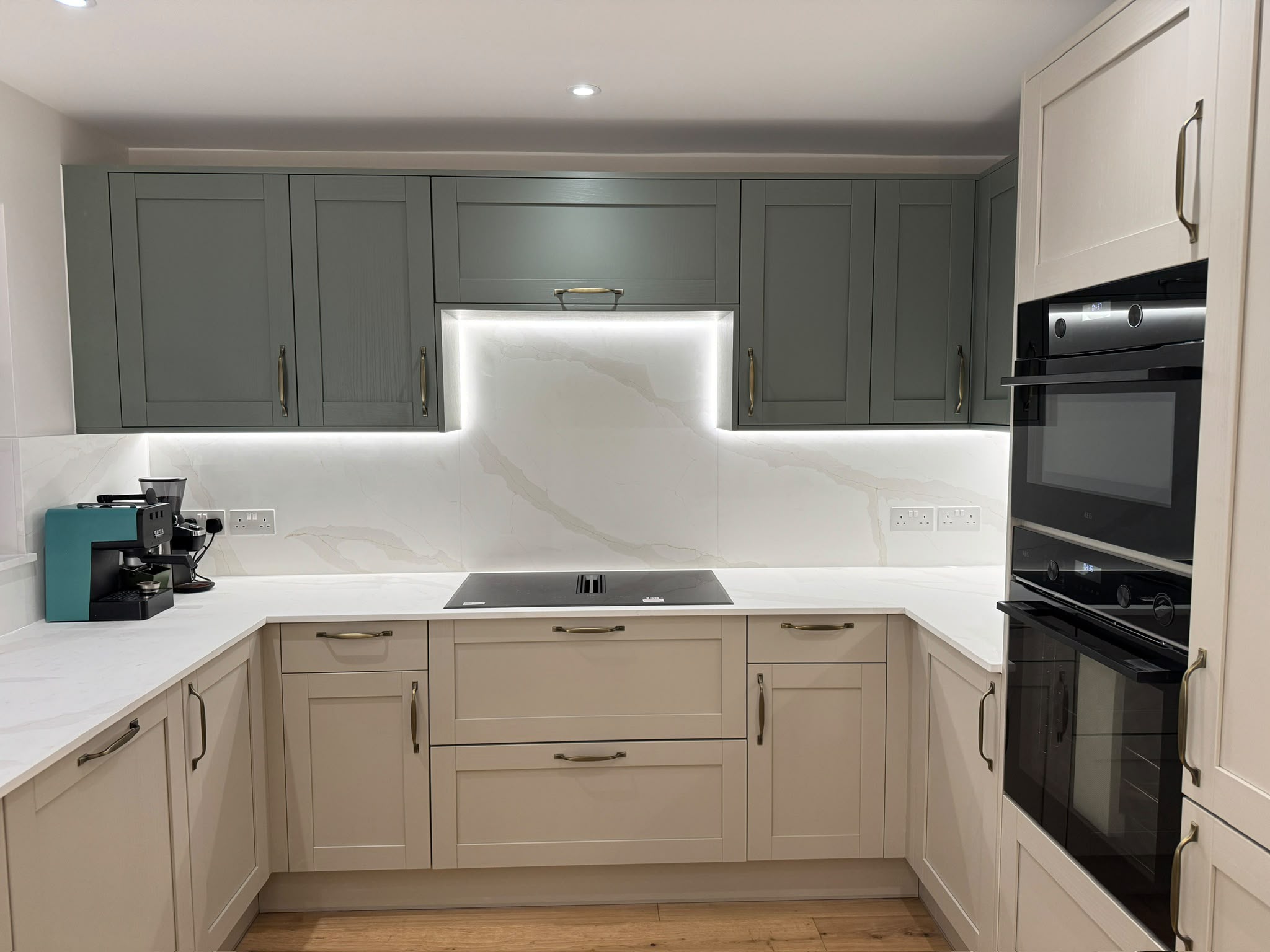
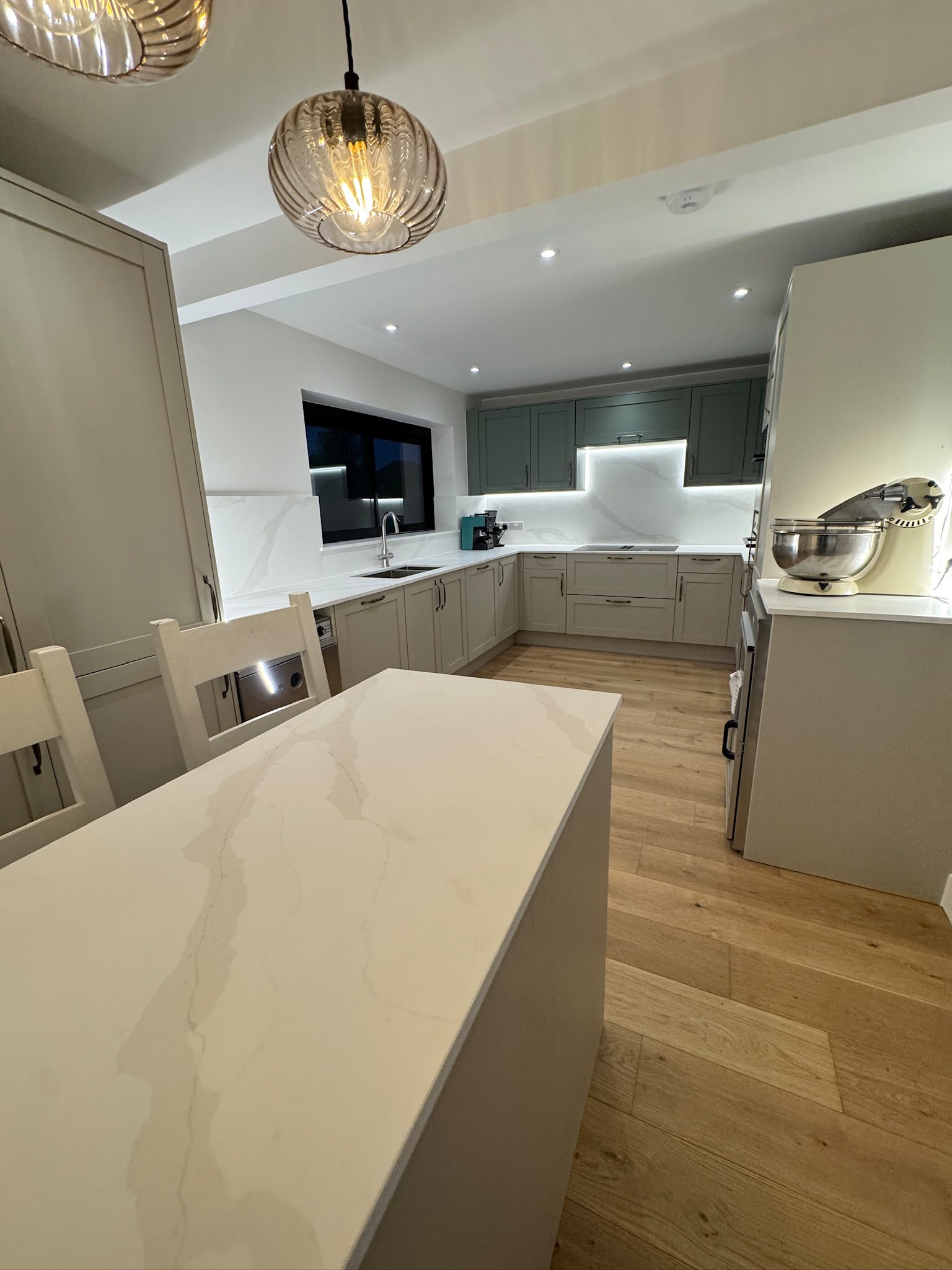
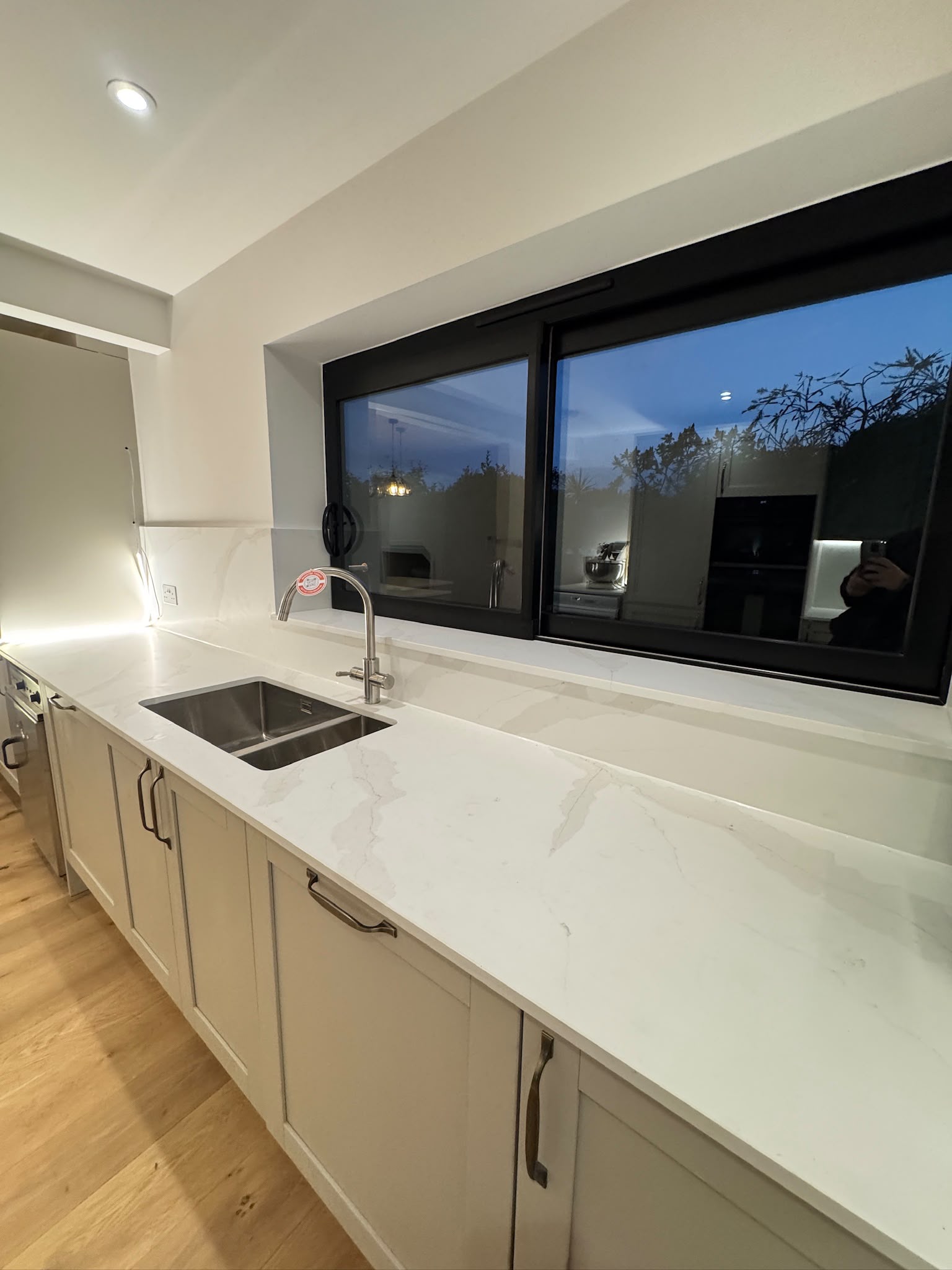
Engineered quartz is made from natural quartz bound with resins and pigments. That gives a consistent finish and a huge choice of colours and patterns.
Its big advantage is low maintenance. Unlike many natural stones it doesn't usually need sealing, and it resists everyday staining well. It isn't heatproof, though. A very hot pan put straight on it can damage or discolour it, so we always recommend a trivet.
Composite and solid-surface products open up other options too, such as joints that look seamless and sinks built into the worktop, depending on the material.
If you want the look of stone without much upkeep, engineered quartz is a great all-round option.
Think about how you use your kitchen
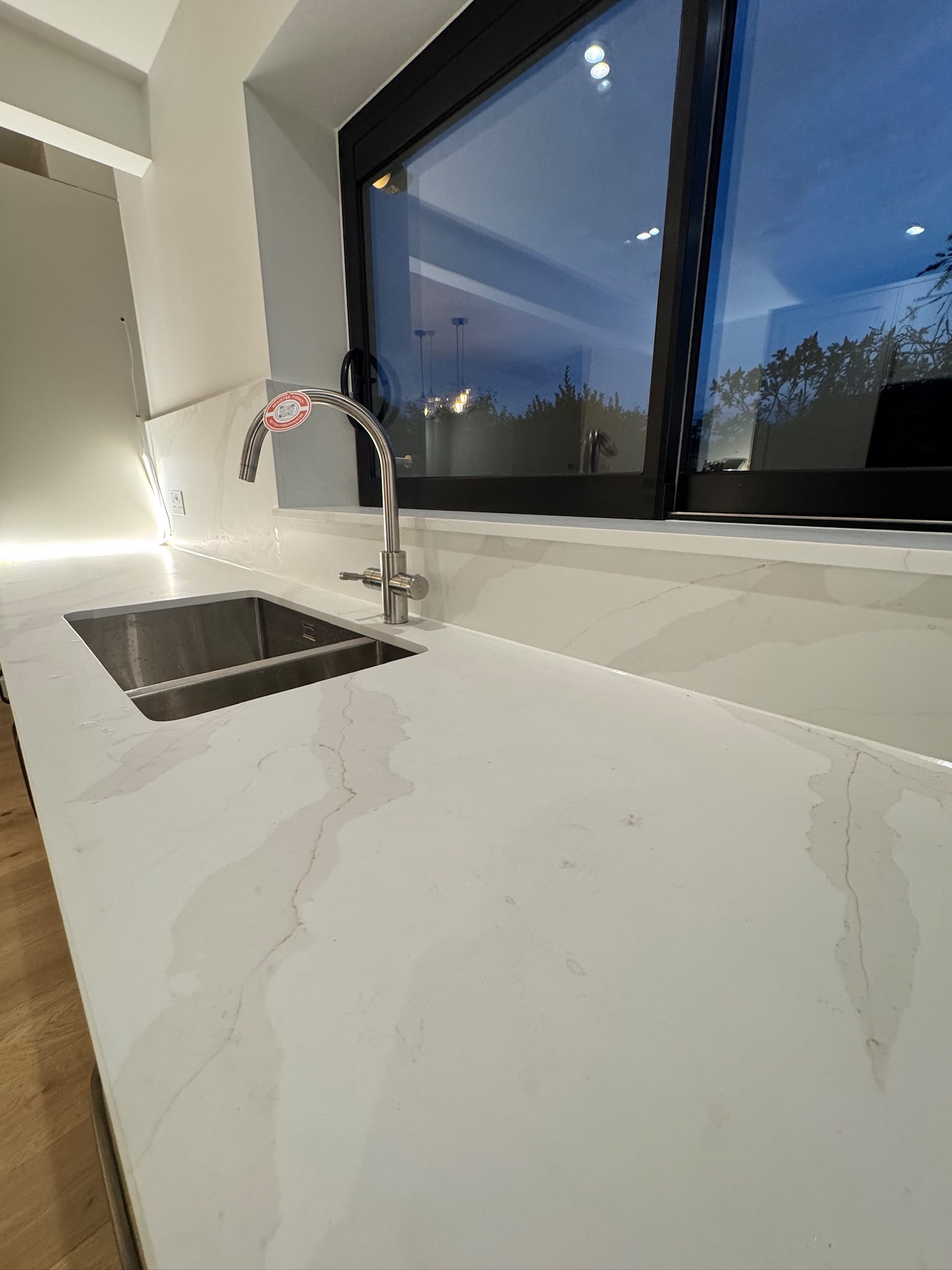
A busy family kitchen asks more of a worktop than one used now and then for cooking and having people round. Tea, coffee, red wine, cooking oil and acidic food all affect materials differently. Some surfaces wipe clean with almost no effort. Others need more care to avoid permanent marks.
No worktop is indestructible either. Even the most expensive stone can be damaged if it's used the wrong way. So we always suggest choosing for the way you actually use your kitchen, not from a showroom sample.
How we help you choose
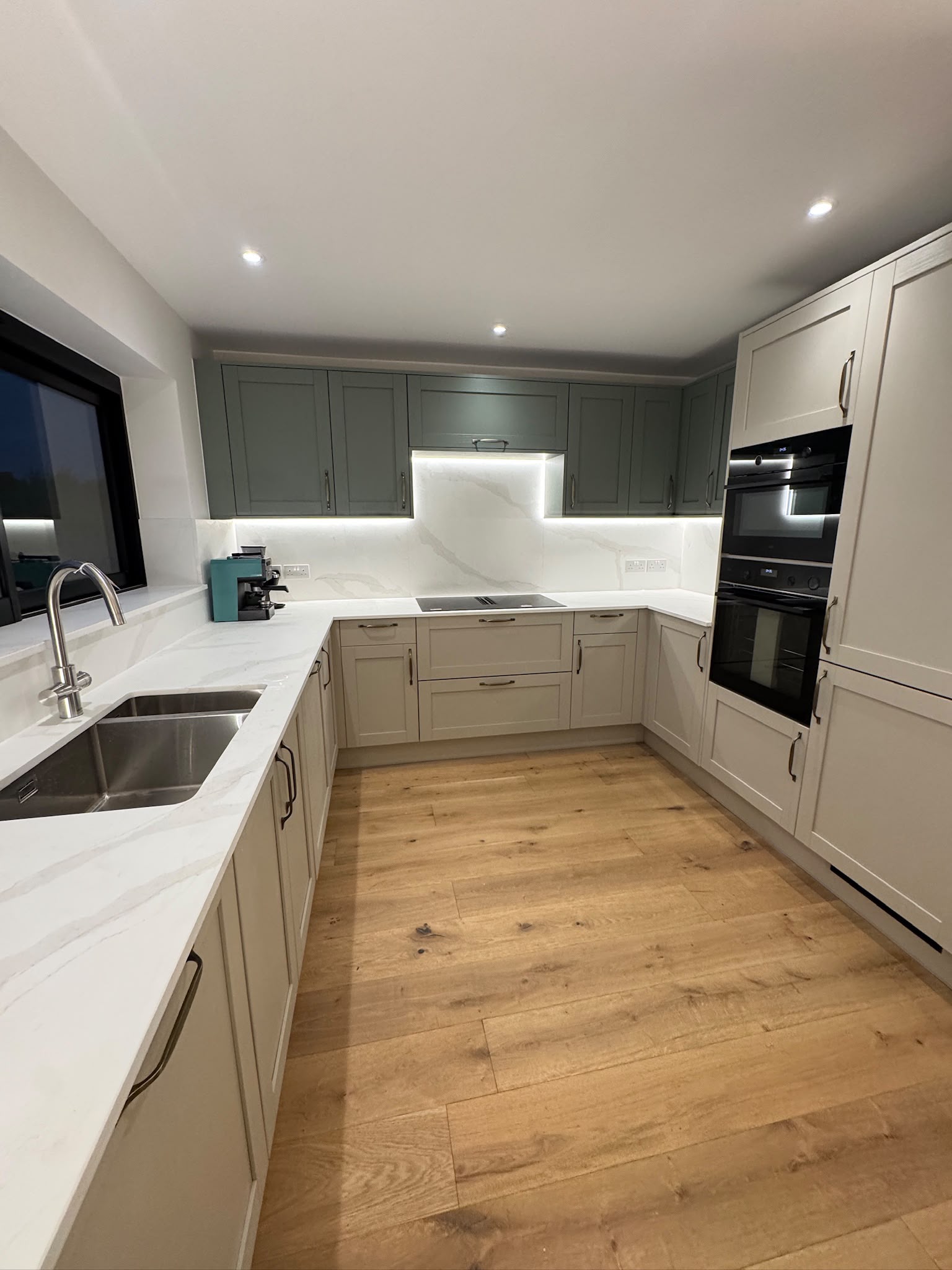
A kitchen should look great and work properly for the people using it. We'll take you through the materials and the upkeep each one needs, and help you find a worktop that suits your design and your budget.
Sometimes a good laminate is exactly the right choice. Sometimes stone or quartz is worth the extra. The aim is the right material for the job, not the most expensive one.
Choosing the worktop is part of our design, supply and installation service. You can see stone worktops in a finished room in our Greystone Avenue kitchen.
More on this: Kitchen Renovations